Continuing Professional Development (CPD)
CPD is the holistic
commitment of professionals towards the enhancement of personal skills and
proficiency throughout their careers.
So, what is CPD? CPD stands for Continuing Professional Development (CPD) and is the term used to describe the learning activities professionals engage in to develop and enhance their abilities. It enables learning to become conscious and proactive, rather than passive and reactive.
CPD combines different methodologies to learning, such as training workshops, conferences and events, e-learning programs, best practice techniques and ideas sharing, all focused for an individual to improve and have effective professional development.
Engaging in Continuing Professional Development ensures that both academic and practical qualifications do not become out-dated or obsolete; allowing individuals to continually ‘up skill’ or ‘re-skill’ themselves, regardless of occupation, age or educational level.
CPD Learning Types
Structured CPD / Active Learning
Structured CPD / active learning involves interactive and participation-based study. It is typically proactive and can include attending a training course, conference, workshop, seminar, lecture, e-learning course or CPD certified event. CPD active learning also applies to when professionals take career orientated exams and assessments (the study and revision would be considered self-directed learning, see Self-Directed CPD).
Reflective CPD / Passive Learning
Reflective learning involves no participant-based interaction, so this form of CPD is much more passive and one directional. Examples of this include reading relevant news articles, podcasts & case studies and industry updates. Some informal meetings can be applicable to CPD reflective learning, but the learning objectives of these meetings must be made clear in an individual’s overall CPD plan.
Self-Directed CPD / Unstructured Learning
Self-directed learning involves all unaccompanied CPD activities. It covers the reading of documents, articles and publications; either in print or online. Reading relevant publications, books by leading experts, industry journals and trade magazines are all types of self-directed CPD. You could also include industry-specific news feeds or research into relevant fields.
What are the Benefits of CPD?
Continuing
Professional Development is essential in helping individuals, organisations to
keep skills and knowledge up to date. Providing CPD enables organisations to
become a knowledge bank to key stakeholders of your organisation. CPD
accredited training courses, workshops and events allow professionals to use
the learning time towards individual CPD requirements.
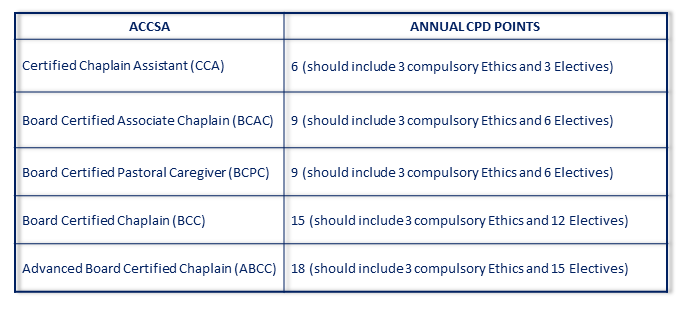
Annual CPD Requirements